01
Enterprise Business Semantics
Every number has a place in the business.Connect metrics, organizations, customers, products, projects, resources, rules, and management actions in a dynamic business graph.
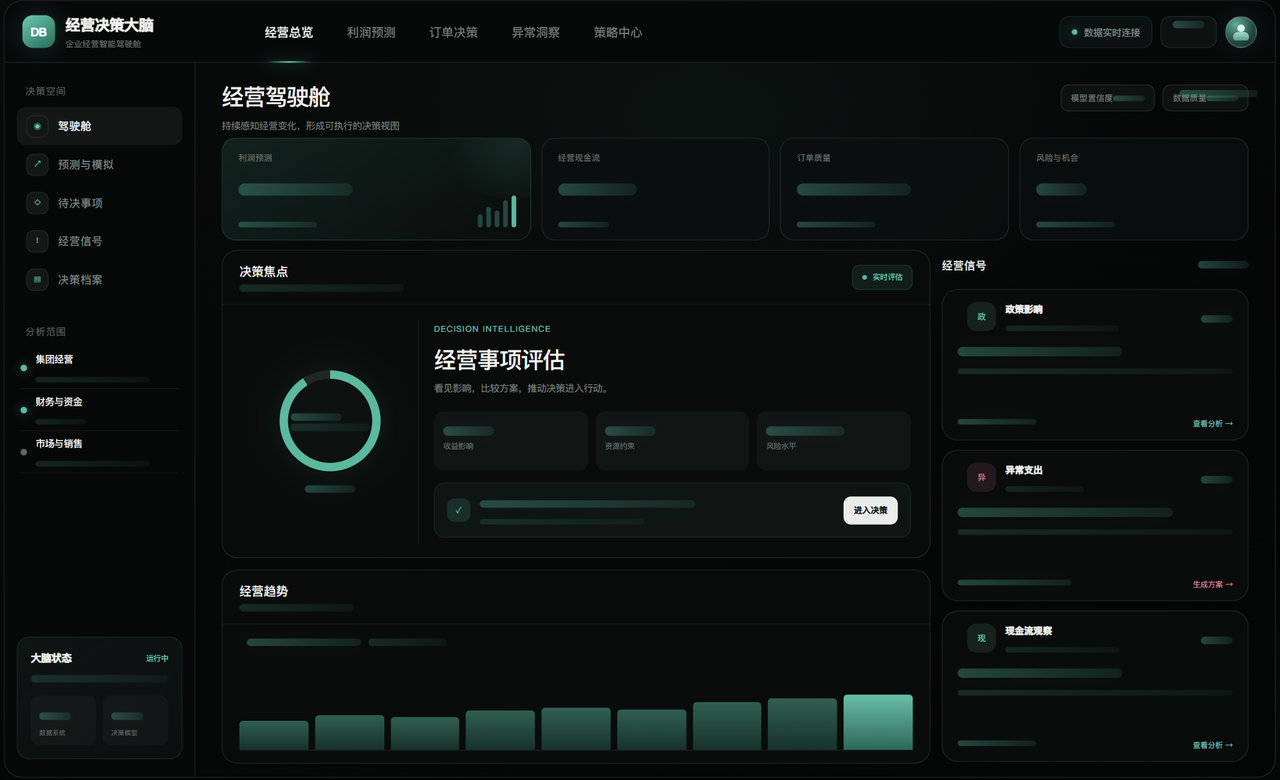
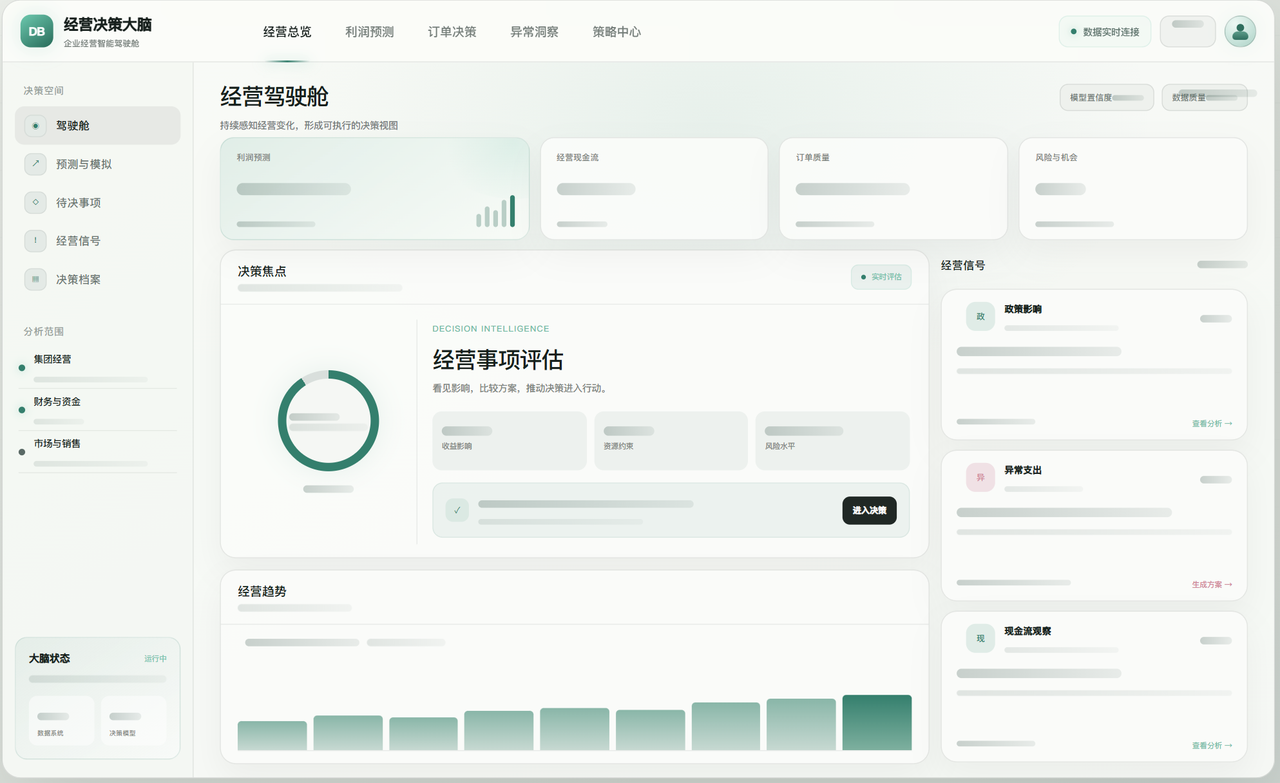
The Enterprise Decision Brain continuously connects metrics, events, organizational relationships, and management actions so leaders can detect change, build evidence, compare options, and move decisions into execution and review.
Starting from business facts, the Decision Brain explains causes, identifies impact pathways, compares options, and turns judgment into executable management action.
Real-time business definitions from order, quotation, and cost systems.
It affects the next 37 days of capacity and raises delay risk for two active orders.
Compare margin, cash, capacity constraints, and customer impact together.
Define pricing conditions, schedule changes, collection milestones, and review dates.
Connect business semantics, real-time signals, causal evidence, strategies, and execution outcomes to move from passive reporting to active understanding and response.
Connect business objects, real-time change, evidence, strategic options, and organizational action in one decision context.
Connect metrics, organizations, customers, products, projects, resources, rules, and management actions in a dynamic business graph.
Continuously combine internal data, business events, and external signals to identify deviations, anomalies, and opportunities.
Form causal hypotheses from data, rules, knowledge, and reasoning while separating facts, judgments, and items that still require verification.
Simulate scenarios around goals, resources, markets, and risk to compare impact, constraints, and likely outcomes.
Turn insight into owned actions and timelines, track results, and retain evidence, feedback, and review experience.
For the question “Should we accept this order?”, the system combines value, delivery capacity, cash, customer credit, and constraints to simulate options and recommend conditions.
Accept while protecting margin and cash safety.
Raise the advance payment to 30% and schedule production in two stages.
The system separates facts, analytical judgments, hypotheses, and management decisions so recommendations can be reviewed, corrected, executed, and learned from.
From CRM, quotation, and cost-center systems under definition version V2.4, verified against finance standards.
See more complete facts, clearer impact pathways, and comparable options so every important decision is easier to execute and review.
Book a Product Demo